
If lily pads are taking over your lake or pond, you’re not alone, and you’re not imagining the problem getting worse each year. A small cluster of water lilies can spread across hundreds of square feet of open water in just two or three growing seasons, blocking swimming areas, tangling boat propellers, and turning your waterfront into a marsh.
The good news: lily pads can be removed. The bad news: most of the advice you’ll find online either doesn’t work, isn’t legal in Washington State, or makes the problem worse. This guide walks through the four real methods for getting rid of lily pads, when each one works, and what the rules look like if you live on a regulated lake.
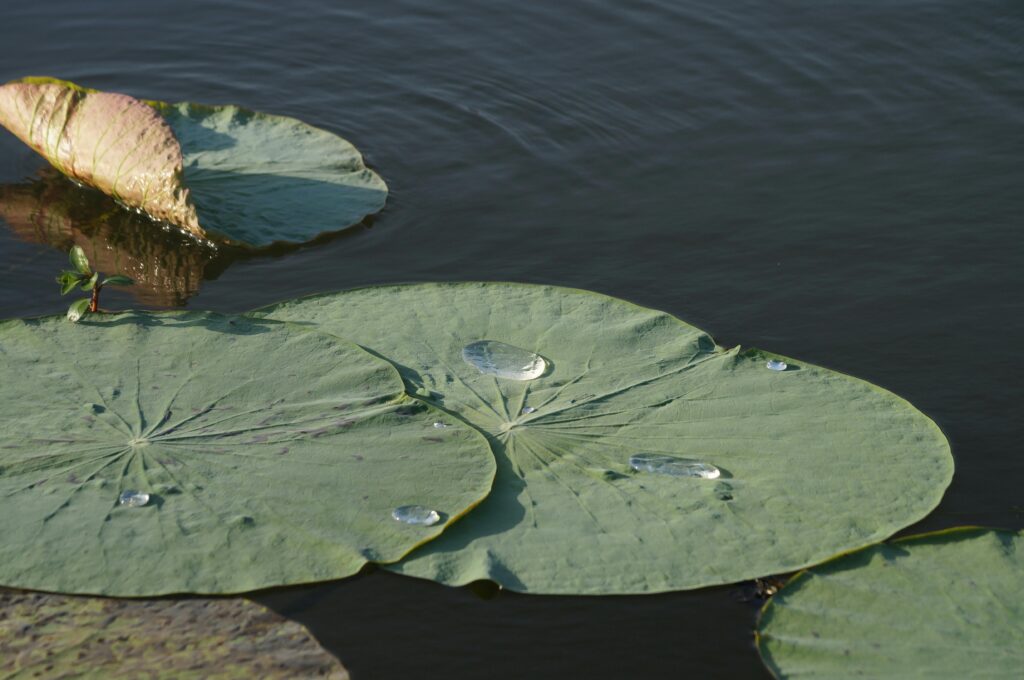
Why Lily Pads Spread So Aggressively
Before you decide how to get rid of lily pads, it helps to understand what you’re actually fighting. Water lilies (Nymphaea odorata, Nymphaea tetragona) and spatterdock (Nuphar species) don’t just grow from seeds. They spread primarily through a thick underground stem system called rhizomes.
A single mature lily pad rhizome can produce dozens of new shoots in a single season, each one capable of reaching the water surface and unfurling a new pad. The rhizomes themselves root deep in the lake or pond sediment, often 1 to 3 feet below the mud surface, and can be as thick as your wrist on established plants.
That’s why simply pulling pads off the water doesn’t work. You’re cutting the visible part of the plant, but the rhizome stays in the sediment and pushes up new growth within weeks. To actually get rid of lily pads, you have to deal with the rhizome system.
The 4 Methods for Getting Rid of Lily Pads (Compared)
There are four real approaches to lily pad removal. Each has trade-offs in terms of cost, effectiveness, legality, and how much labor is involved.
1. Hand-Pulling (DIY)
Best for: Small patches under 100 square feet, in shallow water, on private ponds.
Hand-pulling means wading into the water (or working from a boat) and physically pulling lily pads up by the stem. To actually slow regrowth, you need to pull hard enough to extract some of the rhizome. Just snapping the stem at the water surface accomplishes nothing.
Pros: No cost beyond your time. Safe for fish and native plants. Legal everywhere without a permit.
Cons: Backbreaking work. Most homeowners give up after 30 minutes. Even when done thoroughly, regrowth is significant within weeks because you can’t extract every rhizome by hand.
Honest assessment: Hand-pulling is fine if you have a tiny patch and an afternoon to kill. For anything larger than a swim-area-sized cluster, it’s not a real solution.
2. Bottom Barriers
Best for: Small, defined areas like the footprint under a dock or swim platform.
Bottom barriers are heavy mats, usually made of burlap, woven landscape fabric, or specialized aquatic barrier material, that you sink to the lake bottom over a lily pad bed. By blocking sunlight from reaching the rhizomes, you can kill the plants underneath over the course of 6 to 8 weeks.
Pros: Effective on the specific area you cover. Doesn’t disturb fish or surrounding plants. Often falls under the homeowner maintenance exemption in Washington.
Cons: Only works for small, defined areas. Mats need to be anchored and weighted carefully. They smother all aquatic plants underneath, not just lily pads, so they’re not appropriate where you want to preserve native vegetation. Have to be removed and reinstalled periodically.
Honest assessment: Good tool for spot treatment under a dock or in a swim area. Not a whole-shoreline solution.
3. Chemical Herbicides
Best for: Large-scale problems where mechanical removal isn’t feasible (and where you can get permits).
Aquatic herbicides, usually glyphosate-based formulations approved for aquatic use, or selective products like triclopyr, can kill lily pads down to the rhizome when applied correctly.
Pros: Can treat large areas relatively quickly. When done right, can suppress regrowth for one to two seasons.
Cons: In Washington State, chemical treatment of aquatic plants almost always requires a permit from the Department of Ecology. DIY herbicide application on a lake is illegal in most cases. Dead lily pads decompose in the water, depleting oxygen and stressing fish populations. There’s also significant risk of damaging native plants you’d rather keep.
Honest assessment: Effective when professionally applied with permits, but rarely the right choice for a residential homeowner in Washington. The permit process, environmental drawbacks, and decomposing-vegetation problem make mechanical removal a better default.
4. Mechanical Removal (Professional)
Best for: Anything larger than a hand-pulling job. Most residential and commercial properties.
Mechanical removal uses specialized equipment to cut lily pads at the rhizome and extract the vegetation from the lake. Modern aquatic harvesters like the battery-powered WaterShark can clear 10,000+ square feet of lily pads in a single day, extracting plant material that’s then hauled off-site for composting rather than left in the water to decompose.
Pros: Fast, thorough, and works on areas of any size. No chemicals enter the water. Most residential jobs fall under Washington’s homeowner maintenance exemption, no permit required. Plant material is removed entirely, not left to feed algae blooms.
Cons: Cost is higher than DIY methods, though typically lower than chemical treatment over a multi-year horizon when you account for permit costs, repeated applications, and fish habitat damage.
Honest assessment: This is the right answer for most lake property owners. It’s the only method that combines speed, thoroughness, legality, and environmental safety.
When Is the Best Time of Year to Remove Lily Pads?
Timing matters more than most homeowners realize. Lily pads in Washington State are easiest to remove between late May and early September, when:
- Plants are actively growing, making rhizomes easier to identify and extract
- Water temperatures are warm enough for safe hand-work
- You haven’t missed a full season of growth (which means denser, harder-to-clear mats)
Early-season removal (May to June) produces the longest-lasting results because you’re cutting plants before they reach peak density and before fragments can drift and reroot elsewhere. Late-season removal still works, but you’re usually fighting more biomass and you’ve lost most of the summer’s enjoyment of the water.
Avoid: Trying to remove lily pads in winter or early spring. The plants die back to the rhizome below the water surface, so there’s nothing visible to cut, but the rhizome system is still alive and ready to push up new growth as soon as water temperatures rise.
Do You Need a Permit to Remove Lily Pads in Washington?
This is where a lot of online advice steers Washington homeowners wrong. The rules:
Generally permit-exempt:
- Mechanical or hand removal of aquatic plants around a private dock under the homeowner maintenance exemption
- Bottom barriers covering a small, defined area
- Removal in artificial ponds entirely on your property
Generally requires a permit:
- Any chemical herbicide application in a public waterbody
- Mechanical removal in protected waterbodies or those with listed species
- Large-scale projects affecting more than a defined shoreline footprint
- Commercial or HOA-managed waterfronts
The Washington Department of Ecology and the Department of Fish and Wildlife share jurisdiction here, and the rules vary by waterbody. When in doubt, check the Washington Department of Ecology aquatic plants program before you start, or work with a licensed aquatic vegetation contractor who handles permit research as part of every job.
How to Stop Lily Pads from Coming Back
Even after a thorough removal, lily pads will eventually regrow from rhizomes you couldn’t reach or from fragments that drift in from neighboring shorelines. The realistic goal isn’t permanent eradication, it’s keeping the problem manageable. Here’s what actually works:
- Annual maintenance. Most Washington lakefronts benefit from yearly lily pad removal scheduled in late spring or early summer. It’s the difference between a single afternoon of work and a multi-day clearing project every few years.
- Coordinate with neighbors. Lily pads don’t respect property lines. If the neighboring shoreline is full of pads, fragments will drift to yours. Coordinating removal with adjacent property owners, or organizing a small HOA-style group buy, is dramatically more effective than going it alone.
- Don’t let small patches grow. A 10-foot patch this year is a 30-foot patch next year. Removal cost scales roughly with biomass, so the cheapest time to clear lily pads is always now.
- Skip the koi pond fish solutions you’ll see online. Grass carp can be effective in private ponds in some states, but in Washington, stocking grass carp requires a permit, and the fish are unreliable at lily pad control compared to mechanical removal.
When to Call a Professional
You’re a good candidate for DIY hand-pulling if:
- Your lily pad patch is smaller than about 100 square feet
- The water is shallow enough to wade safely
- You have a few free weekends and don’t mind the labor
You should call a professional if:
- The affected area is larger than 100 square feet
- Lily pads are mixed with cattails, milfoil, or other invasive vegetation
- You need the work done quickly (before a wedding, holiday weekend, or sale of the property)
- You’re a commercial property, HOA, or marina with permit considerations
- You’ve tried hand-pulling before and the lily pads grew back within a season
Mechanical lily pad removal by a licensed contractor typically costs less than two seasons of failed DIY attempts, and you get a clear shoreline within a single day rather than spread across a summer of work.
Need Lily Pads Removed in Washington?
Milfoil Mercenaries provides eco-friendly lily pad removal services across Washington State, including King County, Snohomish County, Pierce County, and Chelan & Douglas counties. Free, no-obligation on-site assessments. Fully licensed and $2M insured.