

Milfoil Removal FAQ
It depends on the season and water conditions. Milfoil grows fastest during warm summer months when water temperatures rise and sunlight is abundant. Most waterfront homeowners in Washington schedule at least one deep cleaning per season, typically in late spring or early summer. Properties with heavy infestations or high-traffic swimming areas often benefit from a second treatment in mid-to-late summer. We offer seasonal maintenance plans that keep your waterfront consistently clear.
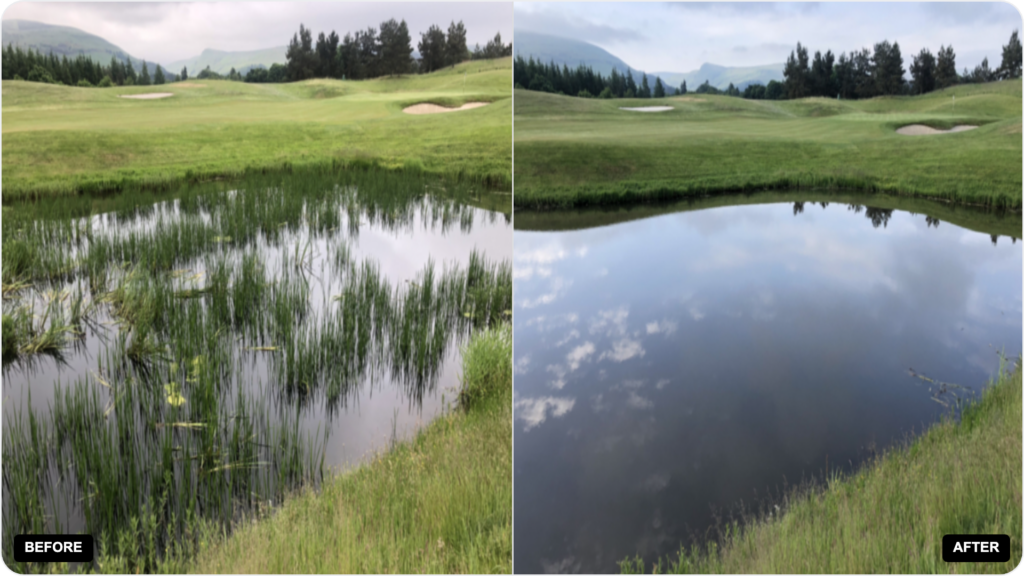
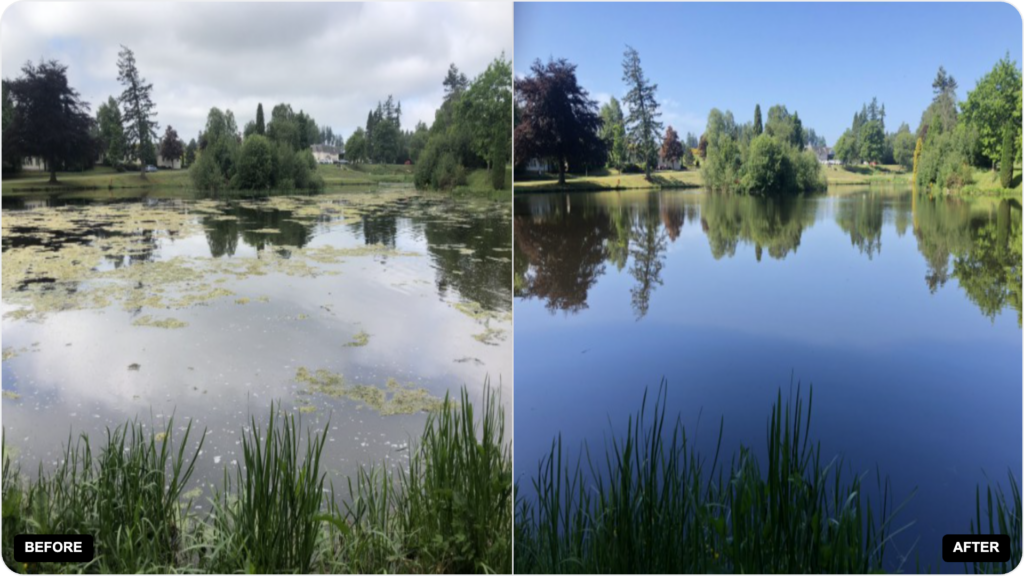
Eurasian milfoil is persistent and can regrow from small root fragments left in the lakebed. Our mechanical removal methods — the WaterShark harvester combined with hand raking and weed razors — extract as much of the plant and root system as possible, which slows regrowth significantly compared to simple cutting. Most residential properties stay clear for several weeks to a few months after treatment, depending on water temperature and sunlight. That’s why many of our customers choose a seasonal maintenance plan rather than a one-time service.
Yes. We use 100% mechanical and manual methods with no chemicals or herbicides. Our battery-powered WaterShark harvester selectively targets milfoil without disturbing the lakebed or harming native aquatic plants. We also follow Washington Department of Fish & Wildlife timing guidelines to avoid disrupting fish spawning and migration periods. All removed vegetation is hauled off-site for composting so nothing re-enters the water.
The cost varies based on the size of the area, density of the milfoil, water depth, and accessibility of your shoreline. Every property is different, so we provide free on-site assessments and no-obligation quotes. Call us at (206) 395-8339 or request a quote online and we’ll give you a clear price after seeing your waterfront.